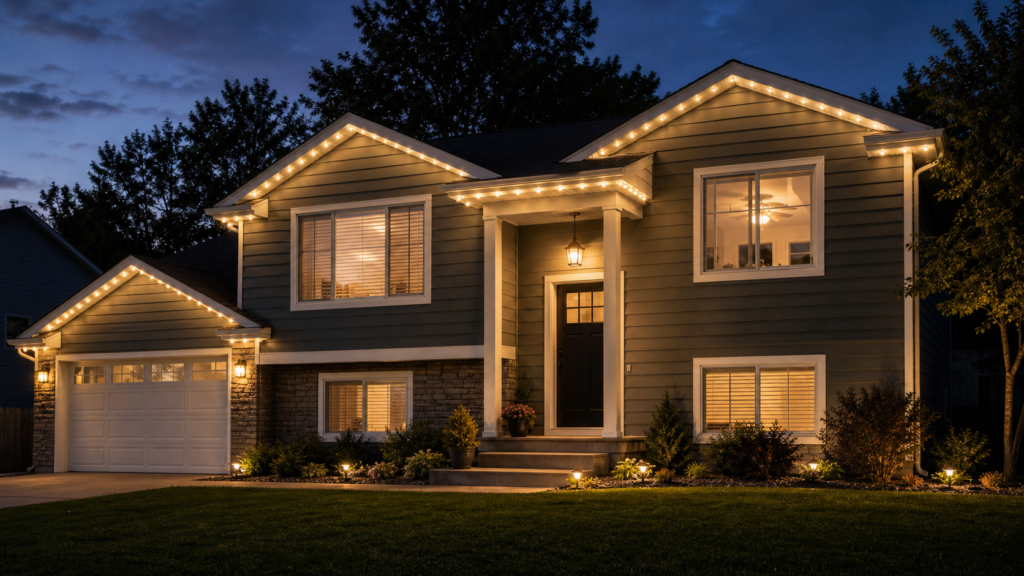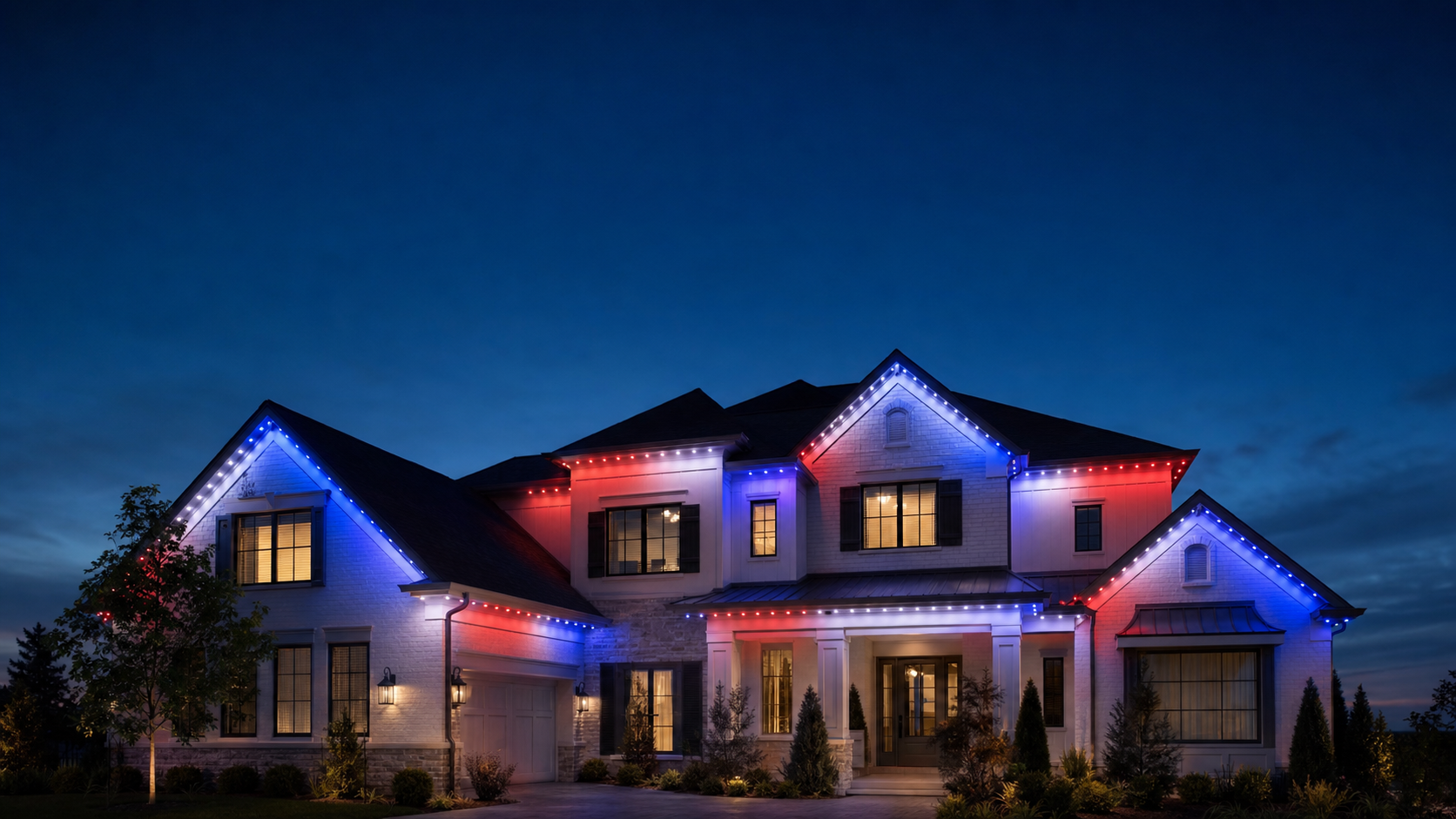
As permanent outdoor lighting continues to grow from a seasonal upgrade into a year-round smart home and architectural lighting category, more contractors and home improvement businesses across the United States and Canada are entering the market.
The revenue potential is real. But as an overseas market service consultant working closely with North American installers, I have also seen the less glamorous side of this growth: more post-winter service calls.
Many systems that work perfectly after installation in summer or fall begin to flicker, glitch, or fail once January and February arrive.
When a system fails, it is not just a warranty issue. It cuts into profit margins, creates expensive truck rolls, frustrates homeowners, and can damage the local reputation an installer has worked hard to build.
If you are an installer, distributor, or contractor looking to protect your business, here is a practical look at why many permanent outdoor lighting systems struggle in harsh winter conditions, and what to look for in your supply chain to avoid those problems.
1. The Waterproofing Myth: Why IP65 or IP67 Is Not the Whole Story
Many suppliers will point to an IP65 or IP67 rating on a spec sheet and say the product is suitable for outdoor use. That rating matters, but it does not tell the whole story.
There is a big difference between a controlled laboratory water test and a North American winter with snow, ice, wind, UV exposure, and repeated freeze-thaw cycles.
The real issue is not only water resistance. It is long-term material stability.
When temperatures drop to -20°C or -30°C, materials contract. During the day, sunlight may warm the track or housing. At night, the system freezes again. Over time, this constant expansion and contraction can stress seals, connectors, solder joints, and PCB assemblies.
Cheap PVC or low-grade plastics can become brittle. Basic silicone seals may lose flexibility. Small gaps can form around lenses, caps, wire entries, or connectors. Once melted snow or freezing rain gets into those gaps, the freeze-thaw cycle can gradually make the damage worse.
Advisor’s Tip: Do not judge a system by its IP rating alone. Look for UV-stabilized, impact-resistant polycarbonate, powder-coated aluminum housings, quality gaskets, proper encapsulation or potting, and connector designs proven for outdoor winter use. A product that survives a water test may still fail after months of real outdoor exposure.
2. Long-Run Voltage Drop and Sub-Zero Signal Reliability
Anyone installing large residential rooflines or commercial projects already understands voltage drop. Long wire runs, undersized conductors, and overloaded power injection points can create visible brightness loss or unstable performance.
Cold weather can make marginal installations even less forgiving.
The issue is not simply that low temperature changes wire resistance. In fact, copper resistance generally decreases as temperature drops. The bigger concern is that winter exposes weak points across the entire electrical system: power supplies may behave differently, connectors become stiff, seals are stressed, and data-line integrity problems become more visible.
For smart pixel systems, especially addressable LED products using protocols such as WS2811-style or SPI-based control, poor signal quality can cause flickering, random color changes, or downstream failure. If the system depends on a single data path, one bad pixel or one unstable connection can affect everything after it.
Advisor’s Tip: Do not rely on the absolute maximum run length claimed by a factory testing in mild conditions. Build in a 15-20% safety buffer, use larger-gauge copper conductors such as 14 AWG or 16 AWG where appropriate, and design power injection points carefully. For higher-end projects, consider systems with breakpoint continuous transmission or dual-data-line designs, so one failed pixel does not take down the entire downstream section.
3. The Real Cost of High-Access Winter Maintenance
Product failure is only part of the problem. Labor is often the bigger cost.
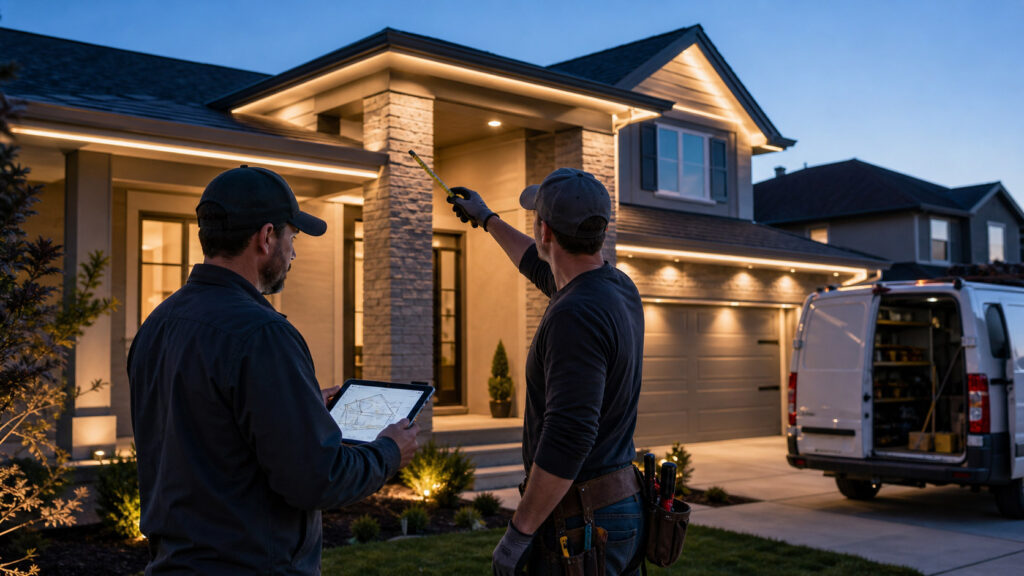
In the United States and Canada, sending a crew back to troubleshoot a faulty pixel in February is expensive, difficult, and sometimes unsafe. Ladders, lifts, icy driveways, snow-covered landscaping, and frozen rooflines all turn a small technical issue into a costly service call.
This is where many low-cost systems create hidden losses.
Some products are designed mainly to be easy to manufacture, not easy to service. If replacing one failed pixel requires cutting wires, soldering on a ladder, removing a long section of track, or disturbing the waterproof seal, the installer loses time and money.
A cheap product may look profitable at the time of purchase, but one or two winter callbacks can erase the margin from the entire job.
Advisor’s Tip: Your supply chain should help you service the system efficiently. Prioritize modular designs, plug-and-play connectors, and track systems that allow individual pixels or sections to be replaced quickly without damaging the waterproof structure. In a strong installation system, field service should be simple, repeatable, and safe.
4. Connectors Are Often the Weakest Link
Many lighting failures are not caused by the LED itself. They come from connectors, cable joints, and wire entry points.
In winter, low-quality connectors become stiff and difficult to handle. Plastic shells may crack. Rubber seals may harden. If a connector is not properly locked, sealed, and strain-relieved, moisture can enter and create intermittent faults that are hard to diagnose.
This is one of the most common reasons installers see systems that work one day and fail the next.
Advisor’s Tip: Ask your supplier specific questions about connector materials, operating temperature range, locking structure, and long-term outdoor testing. A connector should not only be waterproof on paper. It should remain flexible, secure, and serviceable in sub-zero conditions.
5. The Supply Chain Question: Is the Product Built for Your Climate?
Not every factory understands the difference between a warm-weather outdoor lighting application and a winter roofline in Canada, the Midwest, the Northeast, or the Rocky Mountain region.
A product that performs well in mild climates may not be ready for heavy snow, freezing rain, ice buildup, strong UV exposure, salt air, or repeated freeze-thaw cycles.
This is why installers should not evaluate a supplier only by price, brightness, app features, or lead time. The real question is whether the system has been designed for the actual jobsite conditions your customers live in.
Before committing to a product line, ask:
Are the connectors rated for sub-zero flexibility?
Has the housing material been tested for UV exposure and impact resistance?
Can individual pixels or sections be replaced quickly in the field?
Does the system support reliable long-run installation with proper power injection?
Does the supplier provide clear wiring guidance, troubleshooting support, and spare parts?
Does the manufacturer understand North American installation habits, roofline structures, and winter service challenges?
These questions may seem technical, but they directly affect your profit.
The Bottom Line: Stop Competing Only on Material Cost
The permanent holiday and architectural lighting market is no longer a secret. Homeowners are willing to pay for premium outdoor lighting, but they expect the product to be truly permanent.
If you compete only on the lowest material cost from a random supplier, the savings may disappear quickly through truck rolls, replacement parts, customer complaints, and negative online reviews.
A reliable, winter-proven system may cost more upfront, but it protects your margin by reducing callbacks and keeping your crews focused on new installations instead of repairing old ones.
For installers and distributors, the best product is not always the cheapest one on the invoice. It is the one that survives the season, protects your reputation, and helps your business grow year after year.